Welcome to the Philippines!
The Philippines has gorgeous sea shores, welcoming people and one of the most unique cultures in Asia.
If you are planning on spending any length of time in Southeast Asia, then you should strongly consider a visit to this archipelago!
HISTORY
Early History
Starting around 6,000 years ago, Austronesian-speaking peoples began migrating from Taiwan and settling in the Philippines. They brought with them agriculture, pottery, and advanced seafaring technology. These people flourished throughout the beautiful archipelago and eventually developed into small independent communities known as barangays. These communities formed with stratified social structures and animistic religious practices.
By 500 CE, trade began to emerge with neighboring Southeast Asian kingdoms who brought with them Hindu-Buddhist influences. Indian epics and cultural elements, such as the Sanskrit language, spread to the islands. The Laguna Copperplate Inscription (900 CE), the earliest known written document in the Philippines, shows trade and cultural ties with Java (Indonesia) and other parts of Southeast Asia.
Flourishing trade with China can be seen by the 13th century, evidenced by the discovery of Chinese ceramics in archaeological sites. This was accompanied by the arrival of Islam in the southern Philippines through Arab and Malay traders. This led to the establishment of the Sultanate of Sulu in 1450 CE, followed by the Sultanate of Maguindanao, marking the rise of Islamic governance in the south.
Colonial period
This little archipelago, became vital to the Western world after the Portuguese captain Fernão de Magalhães, with the help of Spain, docked here in 1521, during his attempt to circumnavigate the globe. Fernão attempted to convert the locals over completely to Catholicism. He was mostly successful with the island of Cebu, however when he attempted, by force, to do so again on another island, he ended up getting killed in the resulting fight. This ended his role in the voyage, but news of his discoveries still reached the kingdoms of Europe.
In 1543, more Spanish colonizers arrived and renamed a few of the islands “the Philippines”, to pay tribute to King Philip II. This name would eventually be used for the whole nation. In 1571, Spain laid out its capital in Manila, guaranteeing influence in the region for over 3 centuries.
Toward the end of the nineteenth century, calls for Philippine autonomy started to arise. This shift has been credited to José Rizal, who is still considered a public hero. Rizal was eventually killed, yet this only reinforced the movement. The US, which was at that point at war with Spain over the provinces of Cuba and Puerto Rico, upheld their autonomy, and the Republic of the Philippines proclaimed independence on June 12, 1898.
US rule
However, the US had ulterior motives, and the Philippines simply passed from Spanish to American hands. The former allies came to be viewed as adversaries, and the Philippine-American conflict occurred. The Americans sent rebels to inhumane prison camps and killed practically 10% of the populace. The Republic was broken up and the country was nearly completely taken over by the US. However, over the long haul, the new occupiers became generally accepted, and the Philippines even supported them in the Korean and Vietnam wars. English become an official language, and basketball turned into the country’s number one game.
During World War II, Filipinos would endure another serious blow. In the early stages of the pacific war, Japan conducted an effective invasion into the territory. For the following 3 years, the Philippines endured Japanese rule. The capital of Manila, perceived at the time as the most lovely city in Asia, was diminished to rubble.
Modem Era
In 1944, the USA started a mission to recover the islands, and eventually expelled the Japanese from the Philippines in 1945. The next year, the Americans at long last signed over freedom to the people of the Philippines.
The new nation, totally demolished, was determined to rise once more. Today, the circumstances have changed a great deal, and the Philippine economy is now ranked 32nd in the world, thanks in large part to the growing number of tourists arriving to experience the islands. However social inequality is still very high, especially in large urban centers like Manila and Cebu.
OUR TRIP
Summary
– Duration: 25 days
– Total expenses: 182419 JPY (about $1160 USD)
(two people, including flights)
-Daily average: 7296 JPY ($46 USD)
Day 1-3 and Day 23-25 : Manila
-Makati: A major financial and commercial hub with skyscrapers, upscale shopping malls, and vibrant nightlife. We stayed nearby and explored the impressive variety of shopping malls, offering everything from local delicacies to high-end international brands. However, the area was a bit too pricey for us and we ended up spending more time elsewhere.
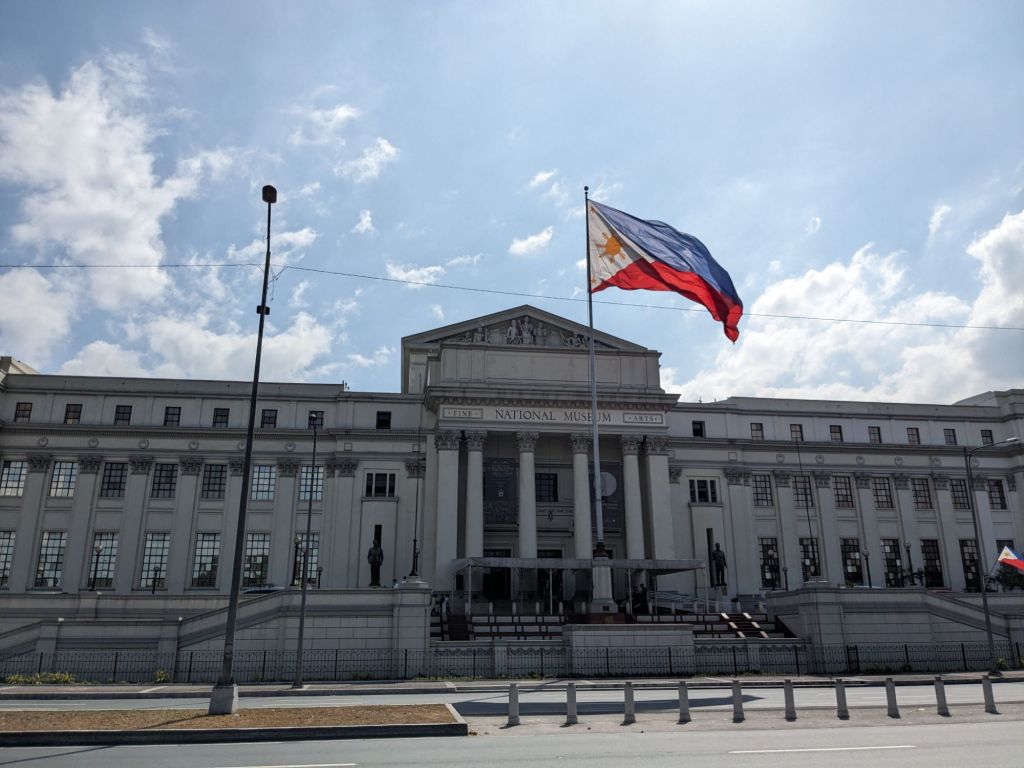
-National Museum of Fine Arts: This expansive museum showcases Filipino artistry and heritage with exhibits in archaeology, botany, history, and stunning fine art collections, providing an in-depth look at the country’s cultural evolution.
We were surprised to find that entry was free for everyone.
-Intramuros: The historic walled city built by Spanish conquistadors in the 16th century, featuring cobblestone streets, Baluarte de San Diego, and the magnificent Manila Cathedral. Walking through Intramuros, you can immerse yourself in the Spanish colonial architecture, taking in the blend of history and Filipino resilience.
Day 4-11: Siargao
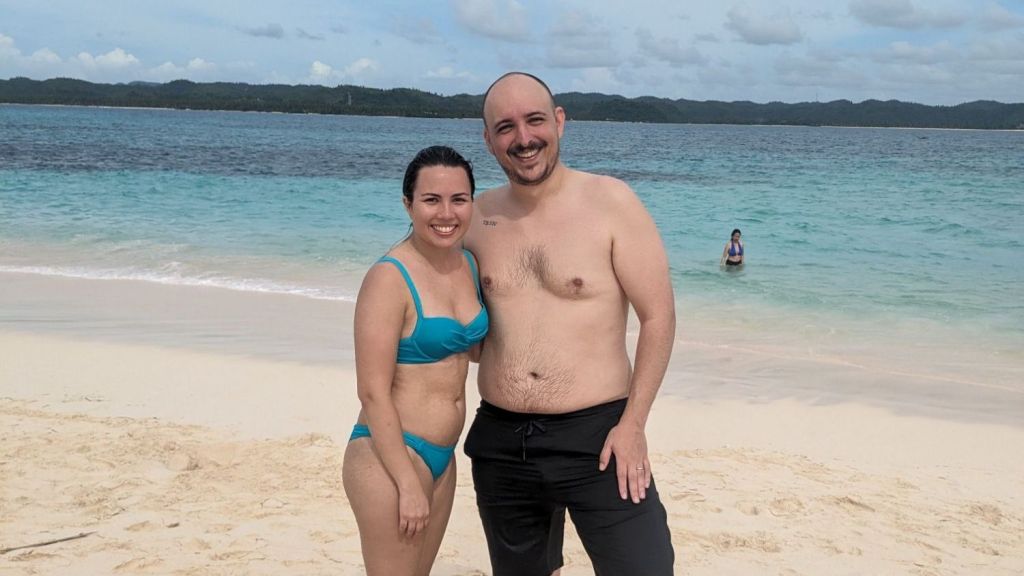
-Beaches: Known for its pristine beaches and surfing spots, Siargao offers breathtaking seashores perfect for relaxation or adventure. Though some are better suited for surfing, there are plenty of spots to take a dip and rest on the sand.
-Catangnan, General Luna: A laid-back area with cozy cafes and beach access, making it easy to stroll around, enjoy local cuisine, and watch the waves.
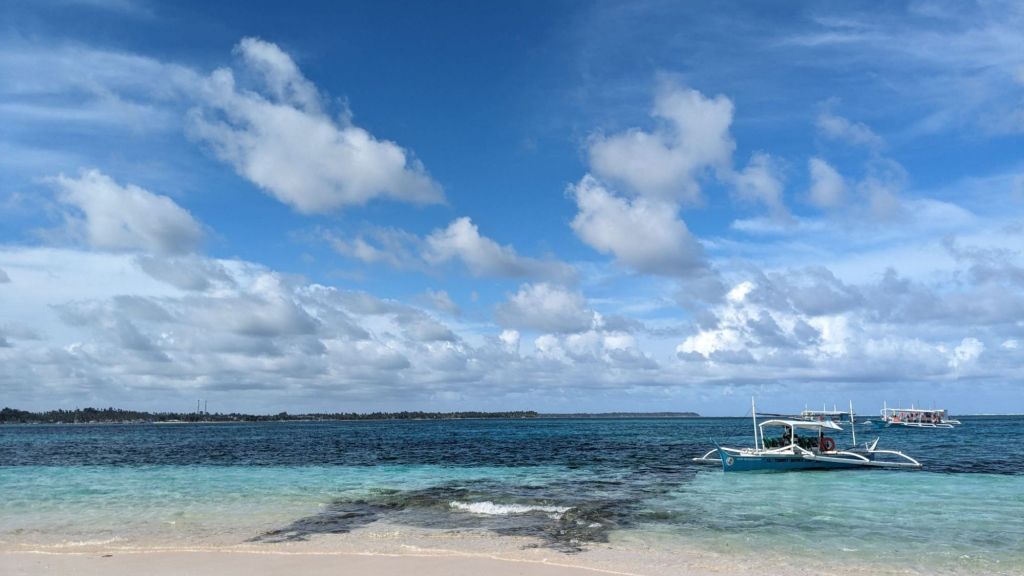
-Island Hopping: We explored Naked Island, Daku Island, Guyam Island, and the hidden Secret Sandbar. Each island offered unique charm, with the clearest waters and some of the best beaches we’ve been to, showcasing Siargao’s untouched beauty.
Sadly, we visited the island during monsoon season and spent a lot of rainy days just relaxing in our hotel. Keep in mind that seasons change island by island in the Philippines!
Day 11-14: Bohol
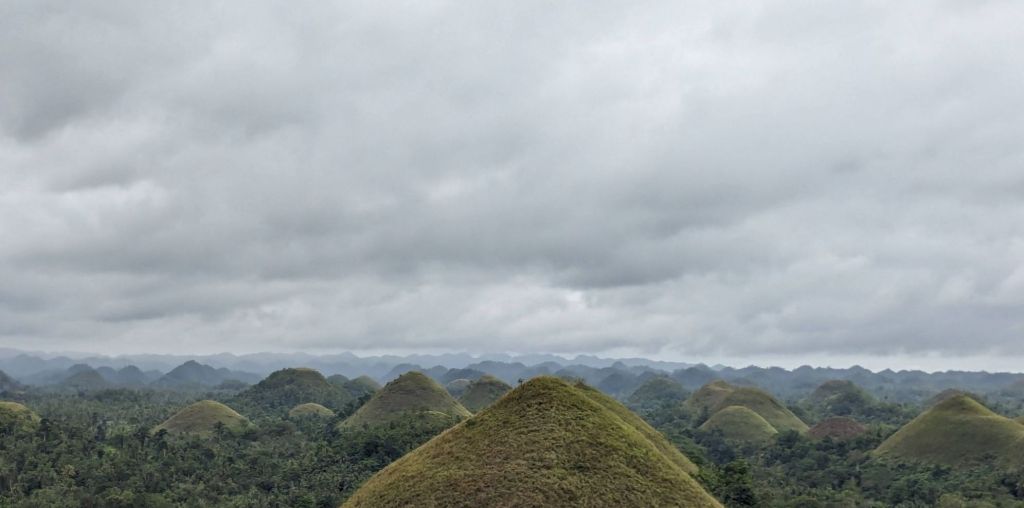
-Chocolate Hills Natural Monument: A stunning geological formation where hundreds of hills appear like chocolate mounds, covering an area of 50 km². It’s one of the most iconic landscapes in the Philippines.
-Panglao Island: Here, we found White Beach, which was the most paradisiacal beach we’ve visited so far, with powdery white sand and crystal-clear waters. The best part for us was that we were able to try couchsurfing for the first time. We stayed with a couple the same ages as us and they welcomed us and took us to this wonderful beach and we could spend time together sharing experiences and travel tips. It’s always better to travel with a good company!
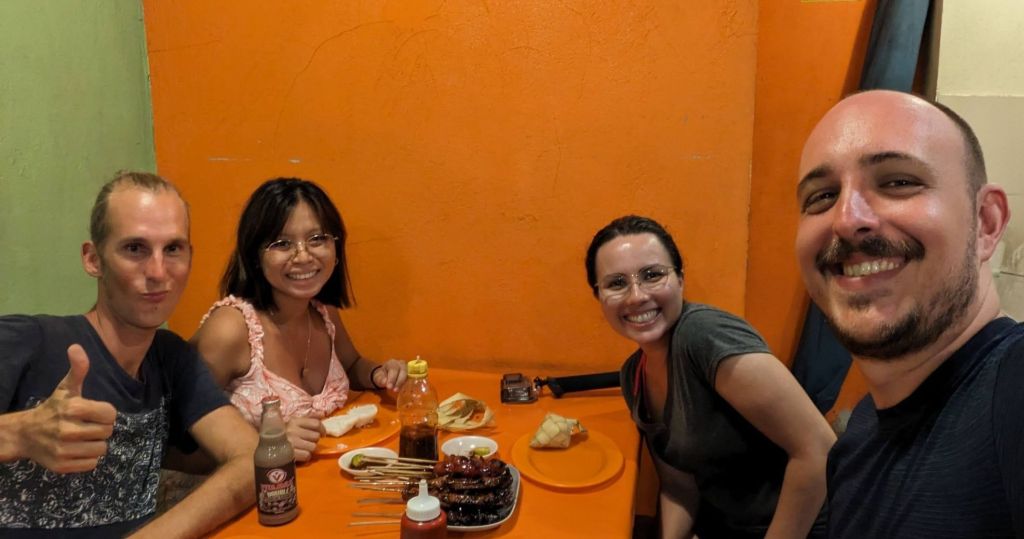
-Cogon Night Market: We had the adventurous experience of trying balut, a popular Filipino street food, adding an extra layer to your culinary exploration.
Day 15-22: Cebu
-Cordova and Entoy’s Bakasihan: This humble eatery gained fame through a Netflix street food show for its unique eel soup, and we got to experience this distinctly local flavor firsthand.
-Famous Lechon: Cebu is known for its lechon, the traditional roasted pork beloved across the country. You can try this culinary staple, experiencing why it’s so renowned for its crispy skin and flavorful meat.
PHILIPPINE CULTURE
People in the Philippines are known for their hospitality, family values, and resilience. Because of Spanish colonization, the Philippines seems a bit like a Latin American country. Most of the populace is Catholic, the old urban communities have that distinct colonial design and many of the traditions are similar. The impact of Spanish culture can likewise be found in the names of urban areas and individuals’ family names.
We did have a little difficulty as travelers on a budget. Since we are backpacking long term, this was not our only destination and we were not able to spend a lot of money. However, as foreigners, we were often expected to be willing to pay luxury prices for food, hotels and transportation. Since most travelers in the islands are there for vacations and willing to splurge, we often had to insist on more budget friendly options and would get strange looks or reactions for doing so. On the street, the trike and taxi drivers always stop or honk to ask if you want a ride, and can be annoyingly persistent. It’s hard to explain to them that we’d rather walk 15 minutes than pay 200 pesos for a ride. This is not unique to the Philippines but it was our first time dealing with it to such a degree.
Customs
-Dining: you can eat noisily, suck on the chicken bone and make noises. This is all normal in the country, and doesn’t show an absence of regard.
-Courtesy: In Asia, it is normal for individuals to remove their shoes while going into a house. Filipinos don’t treat this custom as seriously as some other cultures, but it’s still good to keep in mind while visiting someone’s home.
Language
– Official Languages: Filipino and English
English is widely spoken throughout the country and can be used reliably in most places, especially urban centers.
Filipino is a standardized version of Tagalog (originating in the northern islands).
There are some 130 to 195 languages or dialects spoken in the Philippines.
Spanish has also had a huge influence and it is normal for certain words, like numbers, to be spoken in Spanish.
– Useful Phrase: Learn some basic Filipino phrases like “thank you” (salamat).
Food
Must-try dishes:
– Lechon: A whole pig that’s spit-roasted over charcoal.
– Adobo: Meat marinated in vinegar, soy sauce, and other spices.
– Balut: A semi-developed egg embryo that has been boiled. (Definitely not for everyone)
– Tapsilog: A typical breakfast dish with marinated beef, fried rice and egg.
Filipino food amazed us upon appearance and frustrated us as time passed by. A few locations prepare really tasty dishes with a variety of flavors. Others can seem bland or uninteresting to our tastes. A lot of dishes are also sweeter than we would prefer, including meat and spaghetti. As a rule, food in the Philippines tends to involve a lot of carbs and a little meat.
Something else we saw was that, unlike many other places we’ve visited, more local eateries tended to be worse than larger chains. The food in Manila’s cafeterias or cheap food chains was delightful, while the food served in smaller family run establishments seemed worse. That said, we may have just been unlucky with our choices or been trying the wrong things.
THINGS TO KNOW
Money
Official conversion scale (Jan/2024):
– 1 dollar (USD) = 58.52 Philippine pesos
– 1 yen (JPY) = 0.37 Philippine pesos
– 1 euro (EUR) = 63.78 Philippine pesos
Accessibility:
– Cash: Still widely used, especially outside of central Manila.
-ATMs: Widely available and most accepted international cards.
– Credit Cards: Accepted in the big cities at larger stores and restaurants.
Cost
The Philippines is a country with a minimal cost of living compared to the North America or Europe. However, in recent years the travel industry in the country has developed tremendously, and food, transportation and accommodations can be quite expensive.
-Accommodations: An OK hotel room cost around 30 USD. Budget backpacker hostels cost around 10 USD
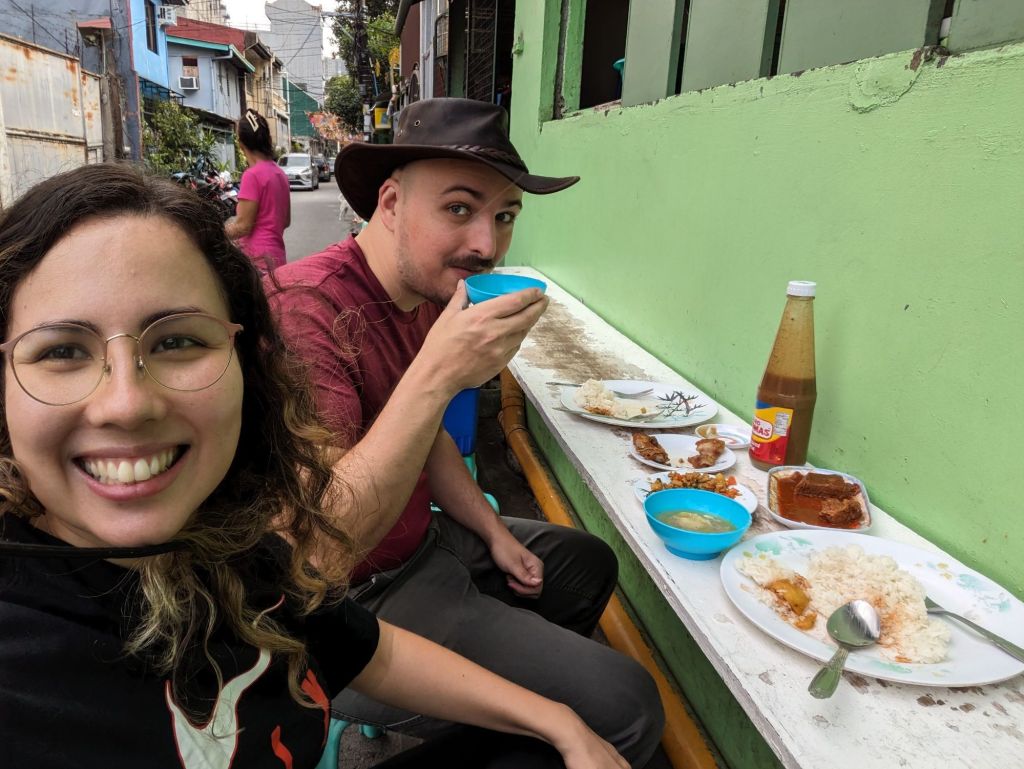
-Food: We had a hard time finding affordable places to eat since cafés and restaurants in touristy areas can be pricy (around 600 – 2000 PHP or 10 – 34 USD). We often ate at small places or chain restaurants for 100 – 400 PHP (1.7 – 6.8 USD).
-Transportation: Between islands the best way to travel is by airplane but it varies in cost from around 2900 – 8800 PHP (50 – 150 USD) and is best booked well in advance. In Manila we used the MRT, which cost 15 – 30 PHP (0.26 – 0.51 USD) and in Siargao and Cebu we used trikes so the cost depended a lot on distance, number of passengers and the driver, but the average price for trike rides was around 50 – 200 PHP per person (0.8 – 3.4 USD). Public transport was not the most efficient, and we had to use Grab a couple of times 250 – 400 PHP (4.26 – 6.82 USD)
Attractions: We didn’t spend much, since we mostly walked around the towns and beaches, exploring as much as possible without spending too much. However, we did one island hopping tour in Siargao, which cost 3800 PHP per person (64 USD), and in Bohol we visited the Chocolate Hills, which cost 100 PHP per person (2 USD) to enter.
Be Aware!
They will try to get money from the tourists everywhere. There are fees and extra expenses for everything in the Philippines: Tourism fees, Ecological fees, Preservation fees, Port fees, Civil fees, Charge fees, etc. Some of them are logical and reasonable but they were almost never clearly explained or mentioned before-hand. Each one is not that much, but they can add up quickly on longer trips.
Arriving and Departing
-Airports: The doorway to and from the Philippines is normally Manila Airport. This worldwide flight terminal is great.
The Philippines requires a ticket to leave the country when arriving. Fortunately we had our tickets out already booked. That said, our customs agent never asked when we arrived so we didn’t need to show it.
-Visa: Many nationalities can enter the Philippines visa-free for 30 days. Brazilians, strangely, can enjoy 60 days. Always check the specific and updated requirements for your country when planning a trip.
Getting Around
– Buses and Boats: In spite the huge number of islands, it is easy to get around the Philippines. Every major island has at least a port or two with regular ferries. To check the boats and buses we used the travel site 12Go! You can purchase tickets on the web or at local port and buses station ticket counters.
– Flights: Flying is the fastest with affordable domestic flights through Cebu Pacific, AirAsia, JetStar and Philippine Airlines.
– MRT: At metro Manila we used the train system, it’s not that extensive unfortunately so we often had to use Grab anyway.
– Taxis: Taxis are affordable in the Philippines, and the Grab app is easy to set-up and helps a lot.
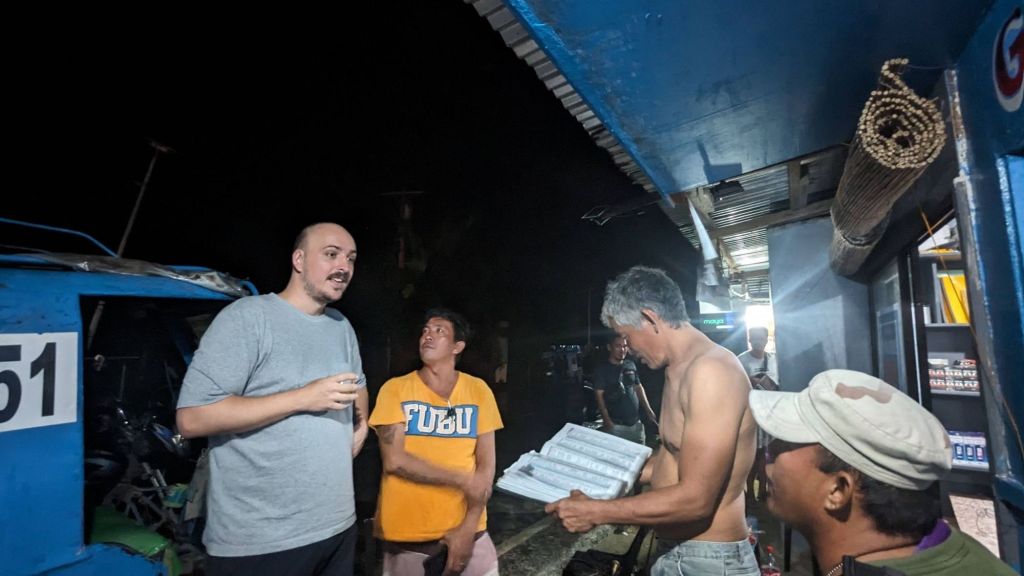
– Tricycles: In Siargao and Bohol we couldn’t find Grab drivers easily but there were plenty of local Trikes (motorcycles converted into trikes for transportation or cargo).
Safety
– Crime: Street crime and petty crime, especially in huge urban areas (particularly Manila) is fairly common so be cautious with pickpockets or individuals who appear to be excessively nice.
– Health risks: Bugs and Stray dogs. Philippines has a high risk of dengue fever from mosquitoes and stay dogs can carry rabies.
We were cautious all the time about pickpockets and the puppies all around the city. We love animals but the stay dogs in the Philippines were not often in good condition.
Electricity
-Voltage 220V, 60Hz.
-Plugs: are by and large 2 level pins. In certain spots it is feasible to track down round pin attachments, yet it is uncommon.
Internet
-Wi-Fi: In every one of the accommodations we stayed at, the internet was extremely slow, and in some the Wi-Fi signal didn’t reach our room.
In ports, air terminals and squares, free Wi-Fi is sometimes offered, however they send an SMS message to approve, which causes problems for the people who don’t have a local number.
-SIM Cards: You can easily get a SIM card at the airport but it not the best value. We went to a shopping mall in downtown Makati and could get a SIM for 30 days for only 200 PHP (3.4 USD). We would like to have gotten one at an official shop but they only offered monthly plans, so we ended up buying from a small vendor who didn’t help us set it up. Back at the hotel room we had a little trouble trying to register the SIM card but did get it to work.
Haggling
We felt like haggling was not common in the Philippines, but the prices offered for things like trikes in touristy places were higher than for locals. Tricycles and cabs, in particular, can be bargained for. Usually, we saved 50 or more pesos.
We eventually met a local who negotiated the trike ride for us and we realized how much more they originally tried to charge us and what the actual price difference was for locals.
WOULD WE LIVE HERE?
Maybe… not.
The Philippines offers a warm and welcoming environment, with English and Filipino as its official languages, making it a bit easier for foreigners to communicate, especially since English is so widely spoken. Immigrating and purchasing property in the Philippines is also generally accessible for foreigners. Although the country has no easy path to permanent residency, long-term options do exist, such as the Special Resident Retiree’s Visa for those above 35, or renewable visas like the Special Investor’s Resident Visa. For many, these visas are a practical solution to staying longer without permanent residency.
In terms of real estate, foreigners are allowed to own condominiums but cannot directly own land. However, they can legally lease land for up to 50 years, with a potential 25-year renewal. Married foreigners may co-own property with their Filipino spouse, but any direct land ownership must be under the spouse’s name.
The country’s vibrant culture, natural beauty, and community spirit are incredibly appealing, and the warm climate is well-suited to our preferences. Still, the lack of direct land ownership and residency paths would make it challenging to consider the Philippines for a long-term stay.
FINAL THOUGHTS
Our time in the Philippines had its challenges. Traveling on a budget proved difficult, especially since restaurant meals were pricier than expected. Unfortunately, our visit to Siargao at the end of January coincided with the rainy season, which left us with less-than-ideal weather for exploring the island.
Despite these setbacks, we’re eager to give the Philippines another chance. Next time, we plan to visit popular spots like Boracay and Palawan and will definitely check the weather beforehand to visit during the right season. With a bit of a larger budget and better timing, we hope to experience the Philippines in a whole new light.
 Juli & Trevor
Leave a comment