Welcome to Ilha Formosa!
Taiwan, also known as Formosa (meaning “Beautiful” in Portuguese) is a hidden gem in East Asia, offering a unique blend of modernity, tradition, stunning landscapes, and delicious food. If you’re planning a backpacking trip in the area, make sure to include Taiwan in your itinerary.
HISTORY
Taiwan has a rich and diverse history that sets it apart from other Asian countries. Originally inhabited by indigenous tribes, the island saw waves of immigration and influence from China, Japan, and Western countries over the centuries.
Early History
Taiwan’s history dates back thousands of years and was first inhabited by Austronesian-speaking indigenous peoples. These groups are believed to have arrived in Taiwan as early as 15,000 years ago, forming diverse tribes with rich cultures and traditions that survive to this day.
The aboriginal peoples of Taiwan share a linguistic, genetic and cultural background with a large number of different groups across Southeast Asia. There is evidence to suggest that they had been taking part in a wide trade network across the region long before the arrival of foreign colonizing powers.
Colonial Period
The first European power to encounter the island was Portugal, who only briefly passed by in 1542. They never landed on the island itself but left it with the name “Ilha Formosa” (Beautiful Island). In the early 17th century, other powers began to show interest in Formosa. The Dutch established a presence in the south of the island in 1624, while the Spanish briefly took control over parts of the north until being expelled by the Dutch in 1642, who then dominated the island until 1662.
In 1662, the Ming Dynasty loyalist Koxinga (Zheng Chenggong) drove the Dutch out and established the Kingdom of Tungning on Taiwan. They would use the island as a base to launch attacks against the Qing Dynasty in mainland China. However, this kingdom lasted only until 1683 when it was conquered by the Qing Dynasty.
Under Qing rule, Taiwan was officially incorporated into the empire as part of Fujian province. During this period, Han Chinese immigration to Taiwan increased significantly, leading to the development of agriculture and trade. However, Qing control was often loose, and the island saw several uprisings and conflicts between indigenous groups and Han settlers.
Modern Era
Following the First Sino-Japanese War, Taiwan was ceded to Japan under the Treaty of Shimonoseki in 1895. Japanese rule brought significant modernization and infrastructure development to Taiwan, including the construction of railways, schools, and public health systems. Despite resistance from some local groups, Japanese influence deeply impacted Taiwan’s society, economy, and culture.
After Japan’s defeat in World War II in 1945, Taiwan was handed over to the Republic of China (ROC). However, following the Chinese Civil War, the ROC government led by Chiang Kai-shek retreated to Taiwan in 1949 after being defeated by the Communist forces of Mao Zedong on the mainland. Upon arrival in Taiwan, the ROC government imposed martial law, which lasted for nearly four decades (1949-1987). During this period, Taiwan underwent rapid industrialization and economic growth, transforming from an agrarian society into one of Asia’s leading economies. However, political freedoms were restricted, and the period is marked by the “White Terror,” during which thousands of people were imprisoned or executed for alleged opposition to the government.
Contemporary Era
The lifting of martial law in 1987 marked the beginning of Taiwan’s transition to democracy. Political reforms in the late 1980s and early 1990s included the legalization of opposition parties, direct presidential elections, and greater civil liberties.
Today, Taiwan is a vibrant democracy with a high standard of living, advanced technology sector, and a robust economy. It continues to navigate complex relations with mainland China, which considers Taiwan a part of its territory despite Taiwan’s self-governing status. The Taiwanese people have developed a distinct identity, balancing their rich cultural heritage with modern influences.
Throughout its history, Taiwan has absorbed and integrated various cultural influences, from indigenous traditions and Chinese customs to Japanese and Western elements. This cultural diversity is evident today in its festivals, cuisine, languages, and daily life, making Taiwan a fascinating destination for visitors seeking a unique blend of the old and the new.
OUR TRIP
Summary
– Duration: 8 days
– Total expenditure: 97,000 JPY ($632 USD) (two people, not including flights)
– Daily average: 12,125 JPY ($80 USD)
Day 1-2: Taipei
The bustling capital city of Taiwan, Taipei, is a blend of the old and new.
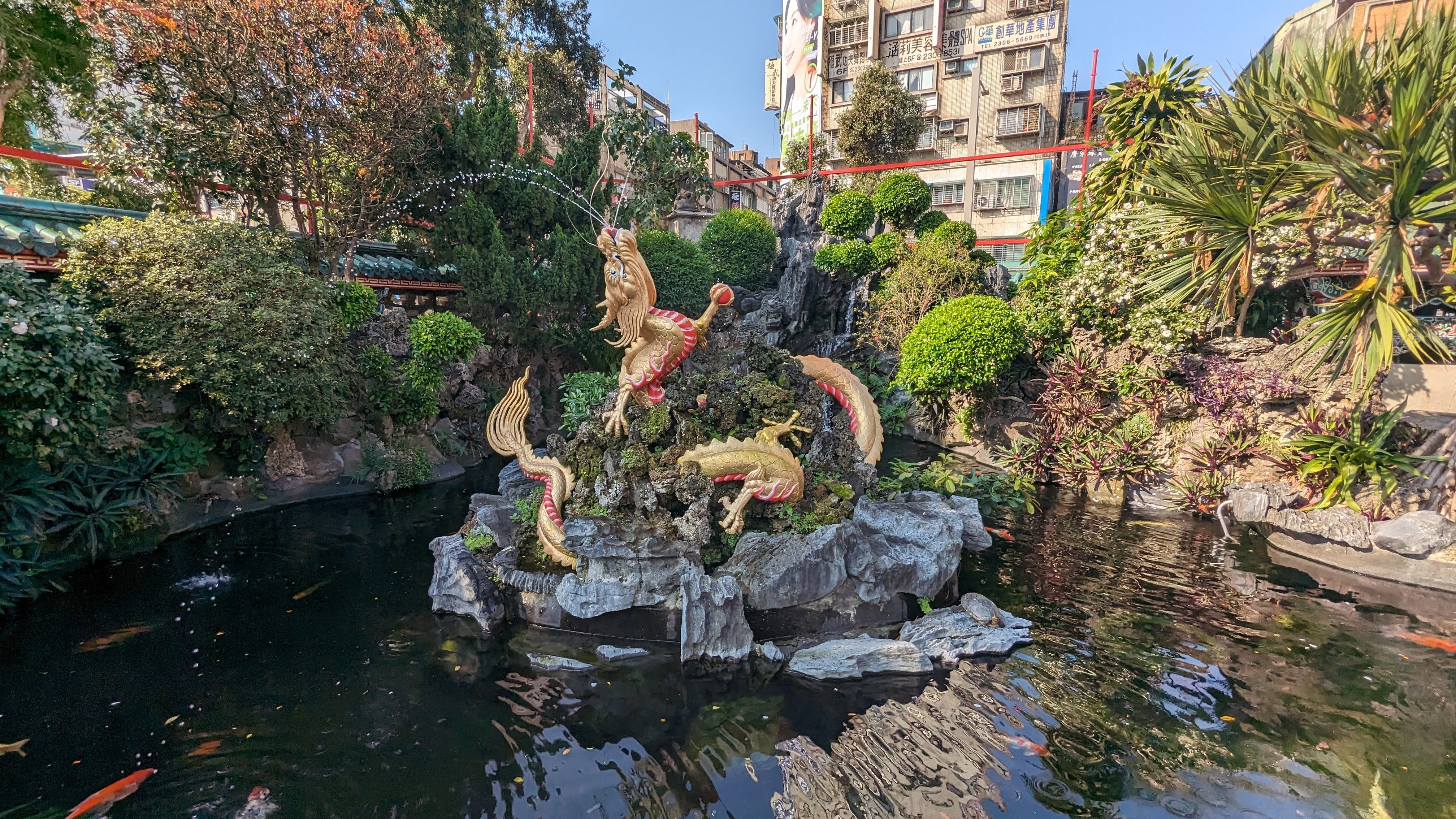
– Longshan temple: we stayed right behind the temple at Longshan hotel, a good location and a spectacular temple. It was our first time visiting a Buddhist temple outside of Japan and I was impressed by how devote the people were after seeing them bring in offerings and read from their prayer books.
– Ximending: A vibrant district known for shopping and street food. We were impressed by how similar the city was to Japan, especially with its Japanese restaurants and Japanese branded shops. It is definitely easy to travel there from Japan!
– Night Markets: Some of the largest and most famous night markets in Taiwan. Our fist stop from the airport after checking-in was the night market near our hotel. We grabbed some delicious fish broth noodles for dinner, our fist meal in Taiwan! We also tried a few other light snacks around the market and fell in love with the atmosphere there!
Day 2-3: Jiufen
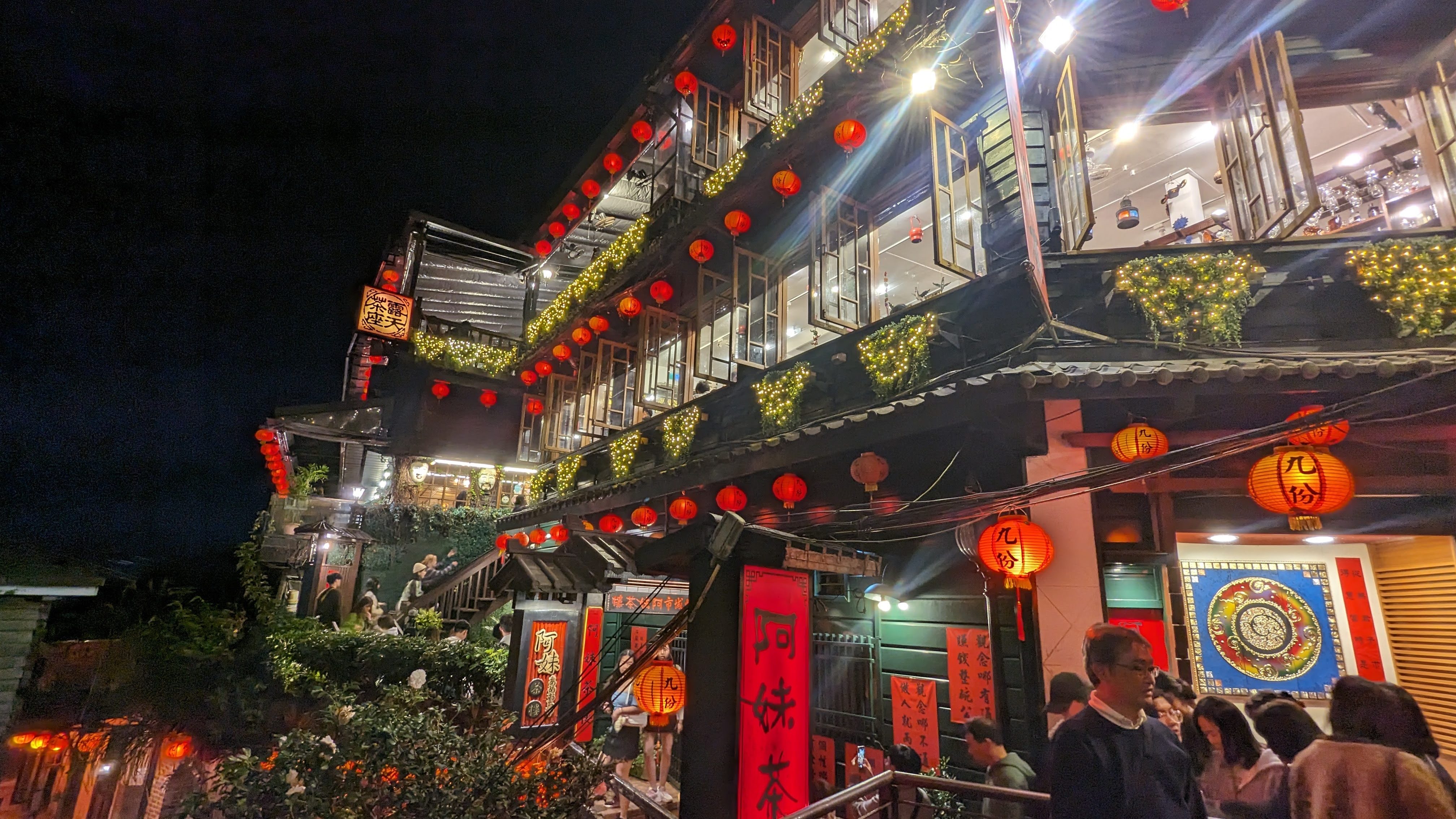
A charming town with narrow alleyways and teahouses, Jiufen was an inspiration for the famous Miyazaki film “Spirited Away.”
– Old Street: Filled with food stalls, souvenir shops, and traditional tea houses. This area gets very crowded at night but the scenic lights, sound and smells can transport you to another world. We were very glad that we decided to spend a night nearby so that we didn’t have to deal with traffic at night.
– The View: Seeing the coast from the top of the mountain was beautiful! There are a few little side streets and cafe’s to explore which offer some wonderful scenery during the daytime.
Day 3-6: Taitung
Located on Taiwan’s east coast, Taitung offers a more relaxed atmosphere and impressive natural beauty. (Juli’s Favorite!)
-Taitung Forest Park: A large park perfect for biking and leisurely walks. It was incredible how many different tropical plants and trees were growing here, especially the many kinds of hibiscus. Juli is a plant lover, and spending the whole day walking in the park appreciating the landscape was perfect for us.
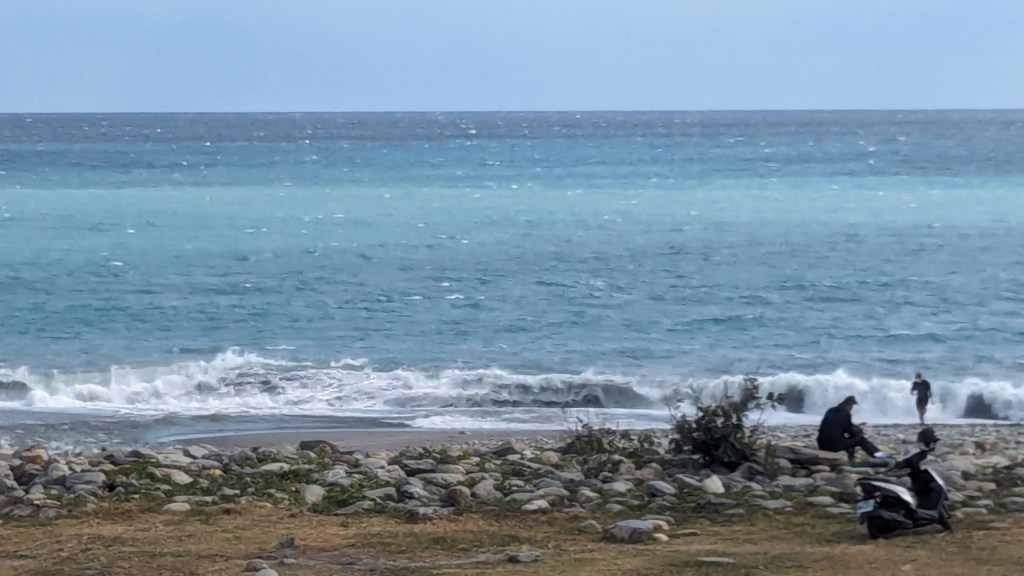
-Taitung Seaside Park: The ocean here was beautiful! There were more shades of blue than I had ever seen before. It was like looking at a painting.
-Old Taitung Station: This little area was very fun to explore! There were a lot of little bohemian shops, street art, resturants and at night people playing music and relaxing.
Day 6-8: Kaohsiung
Taiwan’s second-largest city, Kaohsiung, is a bustling port city with plenty to offer. (Trevor’s Favorite!)
– Love River: Perfect for a romantic evening stroll. There are a few different cafes and Boat tours along the river, though we opted for a more budget friendly walk.
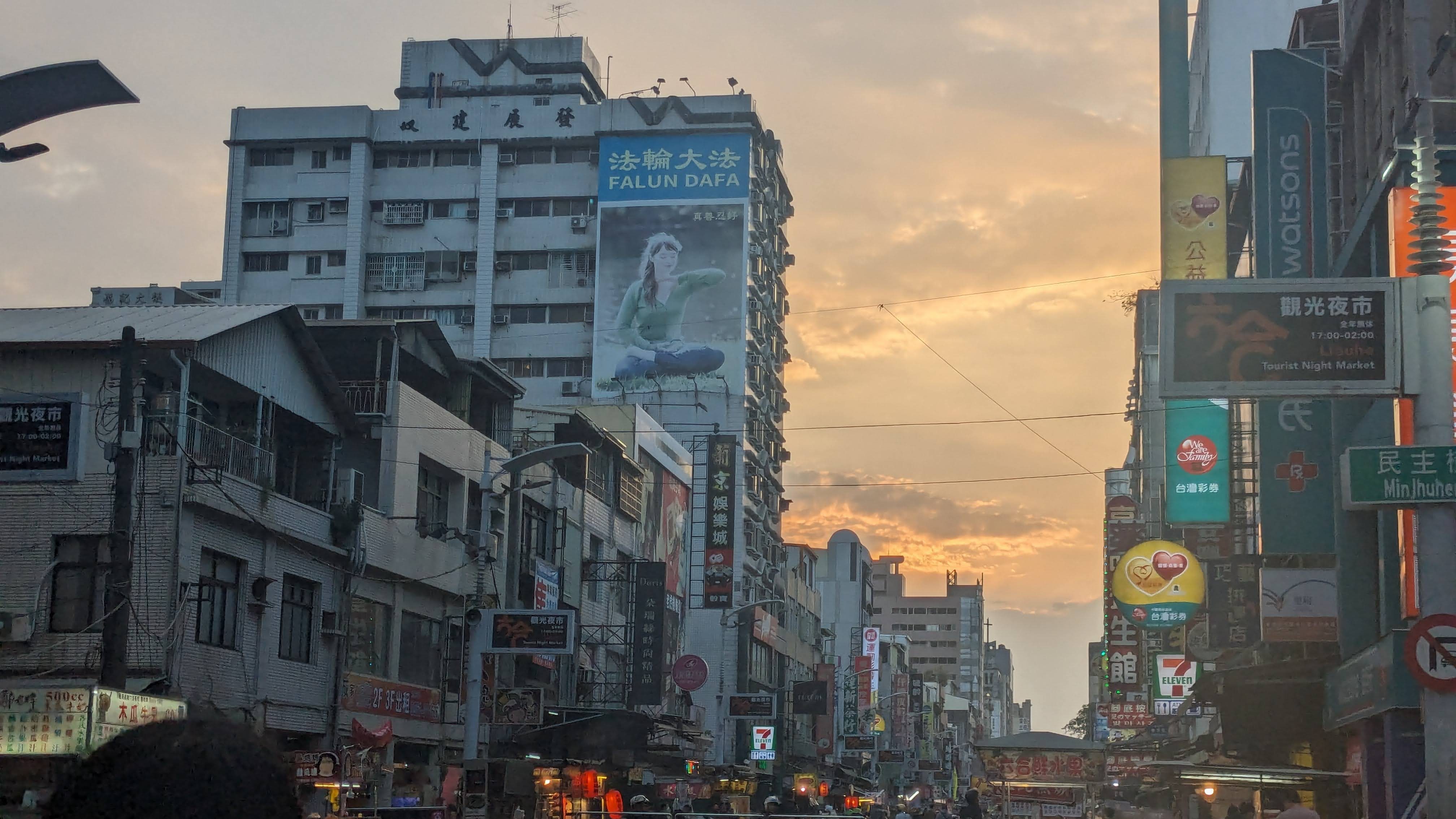
– Liuhe Night Market: Known for its seafood and local delicacies. We stayed nearby the market and at sunset the shops started to prepare. At night, the area becomes a vibrant street with a lot of lights and people eating, drinking and having a lot of fun.
– The Pier2 Art center: This former warehouse district is now home to galleries with rotating exhibitions, shops and outdoor sculptures. Walking though the Pier at night was a romantic experience, with lots of art around to enjoy and take pictures of.
TAIWANESE CULTURE
Taiwanese people are known for their warmth and hospitality. They value hard work, patience, humility, friendliness and respect for others. You’ll find them eager to help and share their culture with visitors. In tourist areas, some locals might try to charge higher prices, but this is relatively uncommon.
Most people practice either Buddhism or Taoism and there are a mix of different related temples to visit. There is also a large Aboriginal population with its own faiths and traditions.
Customs
Taiwanese people are generally polite and respectful, but there are some things to keep in mind:
– Shoes: Remove your shoes when entering someone’s home.
– Greetings: A slight bow or nod is common.
– Dining: Sharing dishes is customary; use serving utensils when available.
Language
– Official Languages: Mandarin Chinese and Taiwanese Hokkien.
– English: Widely understood in major cities, especially among younger generations. In Taitung we had a little difficulty speaking with locals.
– Useful Phrases: Learn some basic Mandarin phrases like “thank you” (xièxiè) and “hello” (nǐ hǎo).
Food
Taiwanese cuisine is renowned for its diversity and flavor. To stay under budget, we ate a lot of “kombini” food and cup noodles. Its super economical and delicious. We also had good onigiri (rice balls) and Sichuan style bento boxes. That said, we made sure to splurge on a few things while we were there.
Must-try dishes include:
– Beef Noodle Soup: A savory and comforting dish.
– Xiao Long Bao: Steamed dumplings filled with soup.
– Boba Tea: This beloved beverage is originally from here!

THINGS TO KNOW
Money
Official Exchange Rates during our visit (Jan/2024):
– 1 dollar (USD) = 30.50 New Taiwan dollars (TWD)
– 1 yen = 0.25 New Taiwan dollars
– 1 euro = 33.28 New Taiwan dollars
Accessibility:
– Cash: Still widely used, especially at street markets and smaller vendors.
– ATMs: Widely available and most accept international cards.
– Credit Cards: Accepted in most large stores and restaurants, but always carry some cash for smaller shops.
Cost
Taiwan is generally affordable compared to Western countries, but prices can vary. Here’s a breakdown of typical costs:
– Accommodation: Budget hostels cost around 600-1,000 TWD ($18-$31 USD) per night.
– Food: Street food is cheap and delicious, with meals costing around 100-200 TWD ($3-$6 USD). Restaurants can range from 200-500 TWD ($6-$15 USD) per meal.
– Transportation: The MRT in Taipei is efficient and affordable. Intercity travel by train or bus is also reasonably priced.
– Attractions: Entrance fees are usually low, around 100-300 TWD ($3-$9 USD), with some free attractions.
Arriving and Departing
– Airports: Taoyuan International Airport near Taipei is the main gateway. Kaohsiung International Airport is another major entry point, though far less busy. We came in through Taipei and left through Kaohsiung.
– Visa: Many nationalities can enter Taiwan visa-free for up to 90 days. For Trevor (with a US passport) it was free. For Juli (with a Brasilian passport) it took a bit of paper work to get the visa. There are multiple different offices in Japan and we had to go to the correct one, which we eventually found after some trial and error. We also had to prepare quite a few documents and the itinerary for the whole trip. They kept her passport and when the visa was ready they were able to send it back to us. Check the specific requirements for your country. This process would be very difficult to do while traveling so make sure to double check!
Getting Around
Traveling around Taiwan is straightforward and affordable:
– MRT: Taipei and Kaohsiung have extensive and efficient metro systems.
– TRA (Taiwan Railways Administration): Provides train services connecting major cities and towns.
– HSR (High-Speed Rail): Offers fast travel between the major cities on the western coast.
– Buses: Long-distance buses are comfortable and cover areas not served by trains.
Safety
Taiwan is one of the safest countries in Asia. Crime rates are low, but it’s always good to stay vigilant, especially in crowded areas.
Electricity
– Voltage: 110V, 60Hz
– Plugs: Typically Type A and B (same as in North America).
Internet
– Wi-Fi: Widely available in hotels, cafes, and public places.
– SIM Cards: Affordable and available at airports and convenience stores. Because we only stayed for a short time and Wi-Fi was available most of the time, we decided not to get a SIM card for our trip. This wasn’t usually a problem but did get in the way in more rural areas (like Jiufen).
Haggling
Haggling is not very common in Taiwan, except in night markets and some tourist areas. Always be polite and reasonable if you decide to negotiate prices.
WOULD WE LIVE HERE?
Maybe… but probably not.
Taiwan would be perfect for us for us for a number of reasons. The climate is ideal, the landscape is beautiful (there is a great mix of mountainous and coastal scenery), and the artistic atmosphere was extremely inspiring. However, the difficulties may just outweigh the benefits in our case.
Taiwan’s primary language, Mandarin Chinese, can be challenging to learn due to its tonal system and character-based writing. Juli is fluent in Japanese and can understand the meaning of SOME characters but, the sounds and pronunciations are totally different.
Also, immigrating to and buying land in Taiwan can be challenging for foreigners. Taiwan doesn’t have an easy permanent residency process, except for those with specific qualifications like highly skilled workers or investors. Generally, foreigners need to have lived in Taiwan for several years on long-term visas (like work or business) to qualify for permanent residency.
As for land ownership, foreigners can buy real state but must meet Taiwan’s reciprocity law-meaning their home country must allow Taiwanese citizens to buy land there. However, some property types (like farmland) are restricted. This would make it difficult for us to accomplish our goal of starting a small scale homestead.
Although the country, people and culture was wonderful to experience, and the climate was perfect for us, we probably won’t end up there for any longer periods of time. That said we will definitely try to visit again!
FINAL THOUGHTS
Taiwan is a destination that offers something for every traveler. From the bustling streets of Taipei to the serene landscapes of Taitung, and the cultural richness of Jiufen and Kaohsiung, there are countless reasons to fall in love with this beautiful island.
For us, having grown up and lived in Japan, Taiwan was the perfect choice for the first stop on our world trip. The strong influence of Japanese culture, coupled with modern shops, restaurants, and easy train access, made it an ideal introduction to the deeper cultural experiences Asia has to offer.
You can see more of our trip to Taiwan and more on Youtube and Instagram and if you would like to support us in our search for a new home, please check out or Patreon!
Thank you for reading and we hope to see you at our next destination!
 Juli & Trevor
Leave a comment